There’s nothing quite like an Alberta road trip. Whether you’re heading to Jasper, Banff, Sylvan Lake, Waterton, or simply escaping for a weekend at the campground. The last thing anyone wants is to spend part of their vacation stranded on the side of the highway with a preventable problem.
The good news? A little preparation goes a long way.
Your tires are the only part of your vehicle that actually touches the road, making them one of the most important safety items to check before any long drive. If you’re towing a camper, they’re even more critical.
Here’s what you should inspect before loading the family and heading out.
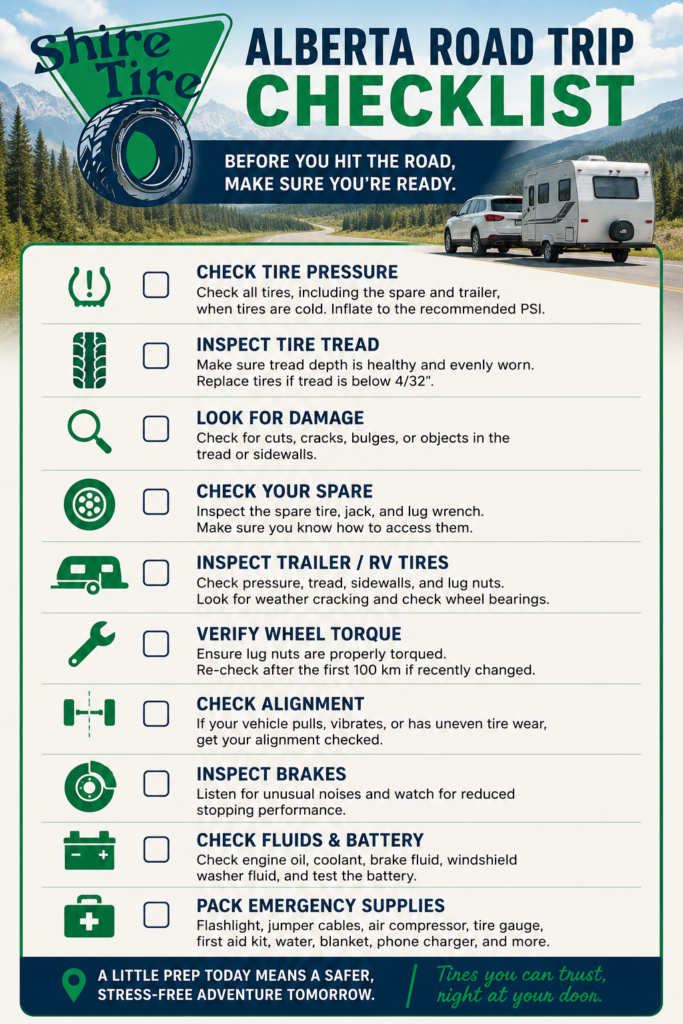
1. Check Tire Pressure
Tire pressure changes with temperature and naturally decreases over time. Driving with underinflated tires can lead to:
- Poor fuel economy
- Uneven tire wear
- Reduced handling
- Increased risk of overheating or blowouts
Always check your tire pressures when the tires are cold and inflate them to the manufacturer’s recommended pressure (found on the placard inside your driver’s door) not the maximum pressure listed on the tire sidewall.
If you’re towing a trailer, remember to check those tires too. Trailer tires are often forgotten until they fail.
2. Inspect Tire Tread
Good tread helps your tires grip wet roads, gravel, and emergency stops.
Look for:
- Uneven wear
- Bald spots
- Cracks in the tread
- Embedded nails or screws
If the tread is getting close to the wear bars or measures below 4/32″ for highway driving, it’s worth considering replacement before a long trip.
3. Look for Sidewall Damage
Walk around your vehicle and inspect every tire.
Watch for:
- Bulges
- Cuts
- Cracks
- Deep scrapes
- Objects lodged in the sidewall
Any sidewall damage should be inspected by a professional. Unlike tread punctures, sidewall damage generally cannot be safely repaired.
4. Don’t Forget Your Spare Tire
Many people never think about their spare until they need it.
Take a few minutes to:
- Check the air pressure
- Inspect the tread
- Make sure the jack and lug wrench are in the vehicle
- Verify you know how to access the spare
If your vehicle uses a tire repair kit instead of a spare, confirm it’s complete and hasn’t expired.
5. If You’re Towing, Check Your Trailer Tires
Trailer tires work hard.
They often:
- Sit for months between trips
- Carry heavy loads
- Receive less maintenance than vehicle tires
Before every trip:
- Check tire pressure
- Inspect tread and sidewalls
- Look for weather cracking
- Verify wheel lug nuts are torqued properly
- Confirm wheel bearings have been serviced if required
Many trailer tire failures happen because of age, not mileage.
6. Check Wheel Torque
If you’ve recently had tires installed or rotated, it’s important to have the lug nuts re-torqued after approximately 100 km of driving.
Loose lug nuts can create serious safety concerns, especially when towing.
7. Verify Wheel Alignment
Does your vehicle:
- Pull to one side?
- Have an off-centre steering wheel?
- Wear tires unevenly?
These may be signs your alignment needs attention.
Driving hundreds of kilometres with poor alignment can shorten tire life and make driving more tiring.
8. Check Your Brakes
Pay attention to your brakes as they can be the difference between a near miss and an accident. Watch for:
- Grinding noises
- Squealing
- Pulsation when braking
- Reduced stopping performance
If anything feels unusual, have them inspected before your trip.
9. Inspect Fluids and Battery
Road trips put extra demand on your vehicle.
Check:
- Engine oil
- Coolant
- Brake fluid
- Windshield washer fluid
- Battery terminals for corrosion
If your battery is several years old and has been slow to start, it’s worth having it tested before you leave.
10. Pack an Emergency Kit
Even a well maintained vehicle can experience unexpected issues.
Consider carrying:
- Flashlight
- Jumper cables
- Portable battery booster
- Tire pressure gauge
- Portable air compressor
- Basic first aid kit
- Drinking water
- Blanket
- Work gloves
- Phone charger
If you’re travelling through the mountains or remote areas, extra supplies are always a good idea.
Travel With Confidence
Road trips should be about making memories, not dealing with preventable tire problems.
A quick inspection before you leave can help improve safety, reduce the chance of breakdowns, and give you confidence for every kilometre of your journey.
If you’re not sure your tires are road-trip ready, Shire Tire can inspect them right at your home or workplace. We’ll check tire condition, air pressure, tread wear, and overall safety so you can start your vacation knowing your vehicle is ready for the road.
Safe travels, and enjoy everything Alberta has to offer this summer.