Gas prices are up again and for most families, that’s not something you can just ignore.
The good news is, you don’t need to drive less or overhaul your routine to make a difference.
A few small adjustments in how you drive and maintain your vehicle can noticeably reduce how often you’re stopping at the pump.
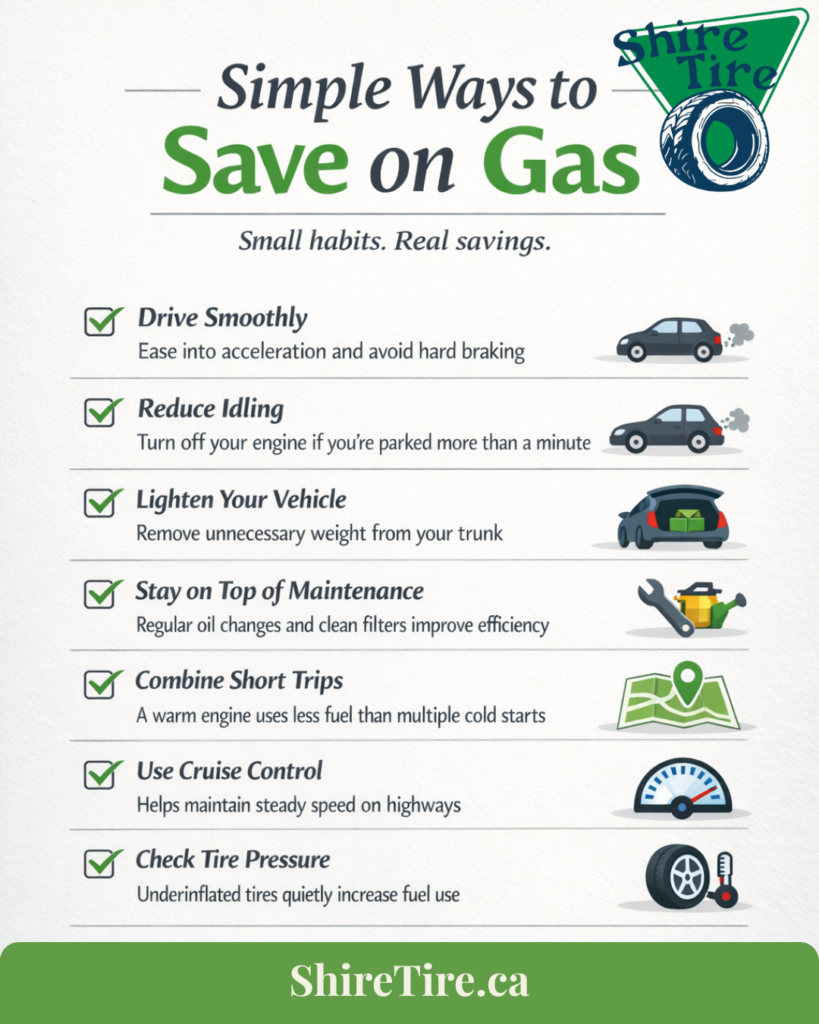
1. Drive a Little Smoother
Fuel efficiency isn’t just about how far you drive, it’s about how you drive.
Aggressive acceleration and hard braking use more fuel than steady, predictable movement.
Try this instead:
- Gradually accelerate from stops
- Look ahead and coast when traffic is slowing
- Keep a steady speed whenever possible
These are small habits, but over a full tank, they add up.
2. Avoid Excess Idling
Letting your vehicle idle (especially in winter or while waiting) is one of the easiest ways to waste fuel.
Modern engines don’t need long warm-ups. In most cases:
- 30–60 seconds is enough before driving
- Idling longer than that just burns fuel without benefit
If you’re waiting more than a minute, it’s often more efficient to shut the engine off.
3. Lighten the Load
Extra weight means extra fuel.
Many vehicles carry around things they don’t need:
- Sports gear
- Tools
- Winter supplies long after the season ends
It might not seem like much, but over time, that added weight increases fuel consumption.
4. Keep Up With Basic Maintenance
A well-maintained vehicle runs more efficiently. Treat your vehicle right and it will reward you with fuel savings.
A few key things that make a difference:
- Regular oil changes
- Clean air filters
- Properly functioning spark plugs
When these are neglected, your engine has to work harder, which means using more fuel.
5. Plan Short Trips Smarter
Cold engines use more fuel.
If you’re making multiple short trips throughout the day, try combining them into one outing when possible.
Your engine stays warm, runs more efficiently, and you burn less fuel overall.
6. Use Cruise Control on Highways
On longer drives, maintaining a steady speed improves fuel economy.
Cruise control helps eliminate the small speed fluctuations that quietly increase fuel usage.
7. Don’t Ignore Your Tires (Quick but Important)
Tires play a smaller role than driving habits, but they still matter.
If your tires are underinflated or worn unevenly:
- Your vehicle uses more energy to move
- Fuel efficiency drops without being obvious
A quick pressure check and proper seasonal changeover helps keep things running efficiently.
The Bottom Line
You don’t need to make big changes to see savings.
Most of the difference comes from small, consistent habits, and keeping your vehicle in good working order.
We Make One Part of That Easy
At Shire Tire, we handle your tire changes and checks right at your home.
No waiting rooms, no rearranging your day, just one less thing to think about.
Tires you can trust, right at your door.